


 en
en
 UZ
UZ  RU
RU 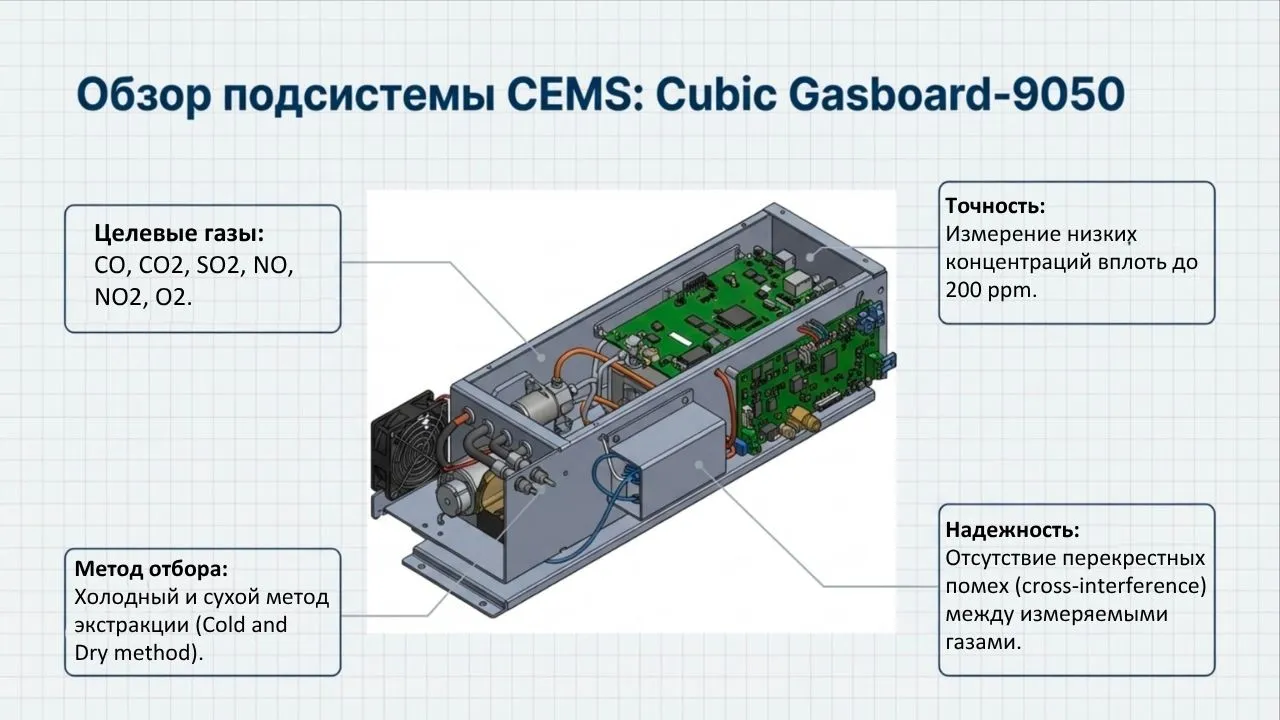
What the service includes
- Design: we survey the site and design the system around your process, emission sources and sanitary protection zone layout;
- Equipment selection and supply: Gasmet and Cubic gas analysers and stations. We are an authorised partner of both manufacturers;
- Cabinets and software: we develop automation schematics, build the cabinets and write software for data acquisition and processing;
- Certification: we see the system through to confirmed compliance with O'zMSt 194:2024 and O'zMSt 195:2024;
- Installation and commissioning: we install the equipment, commission it and train your staff;
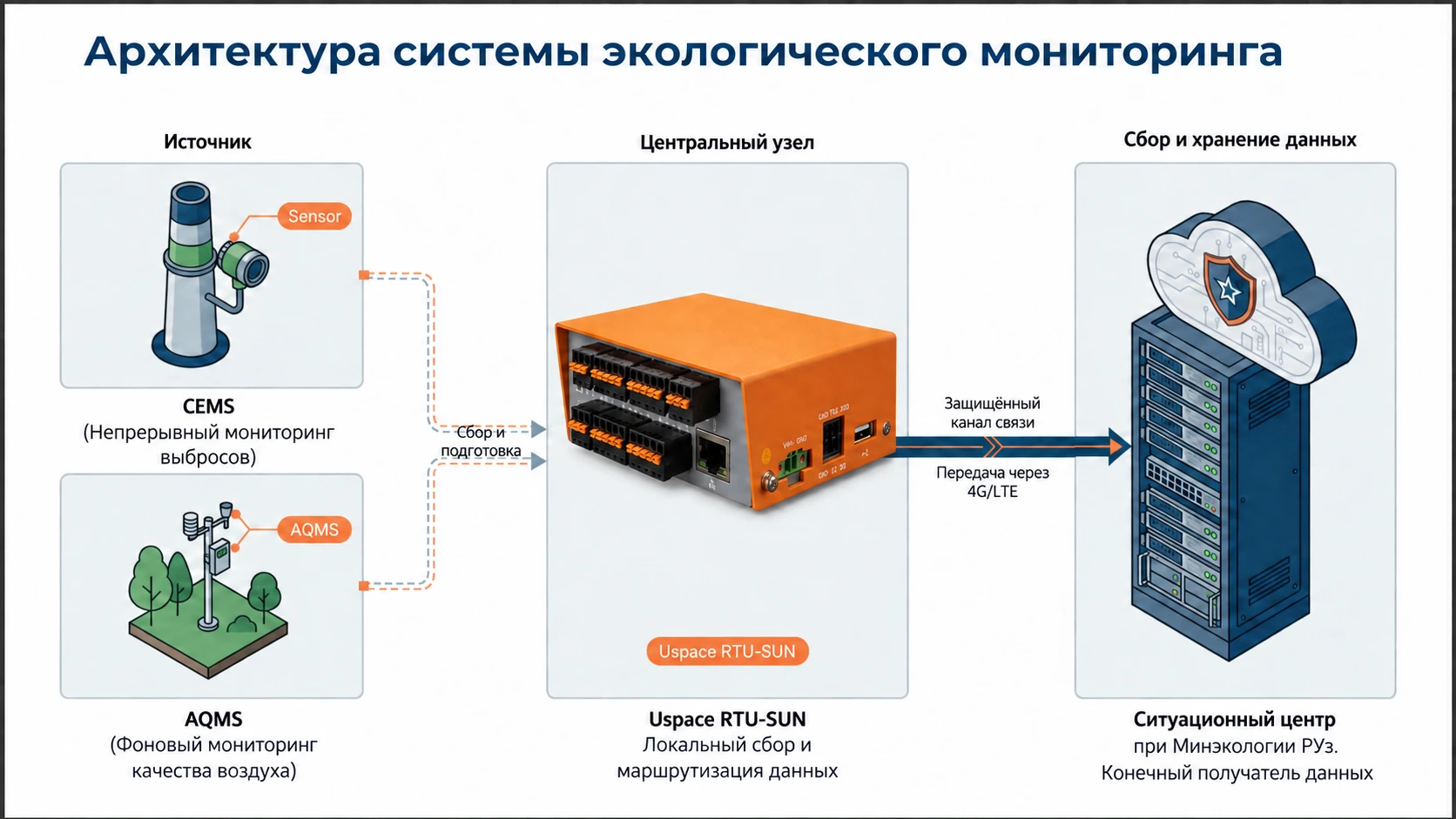
- Integration and data transmission: we connect the system to your ICS and corporate systems and set up direct data transmission to the Ecology Committee via the Uspace platform.
What CEMS and AQMS measure
- CEMS, at the emission source: NOₓ, SO₂, CO, CO₂; dust and particulate matter; HCl, HF, NH₃ and O₂ depending on the process; flue gas temperature, pressure, humidity, velocity and flow rate. The system shows what the stack emits and how much, as it changes over time.
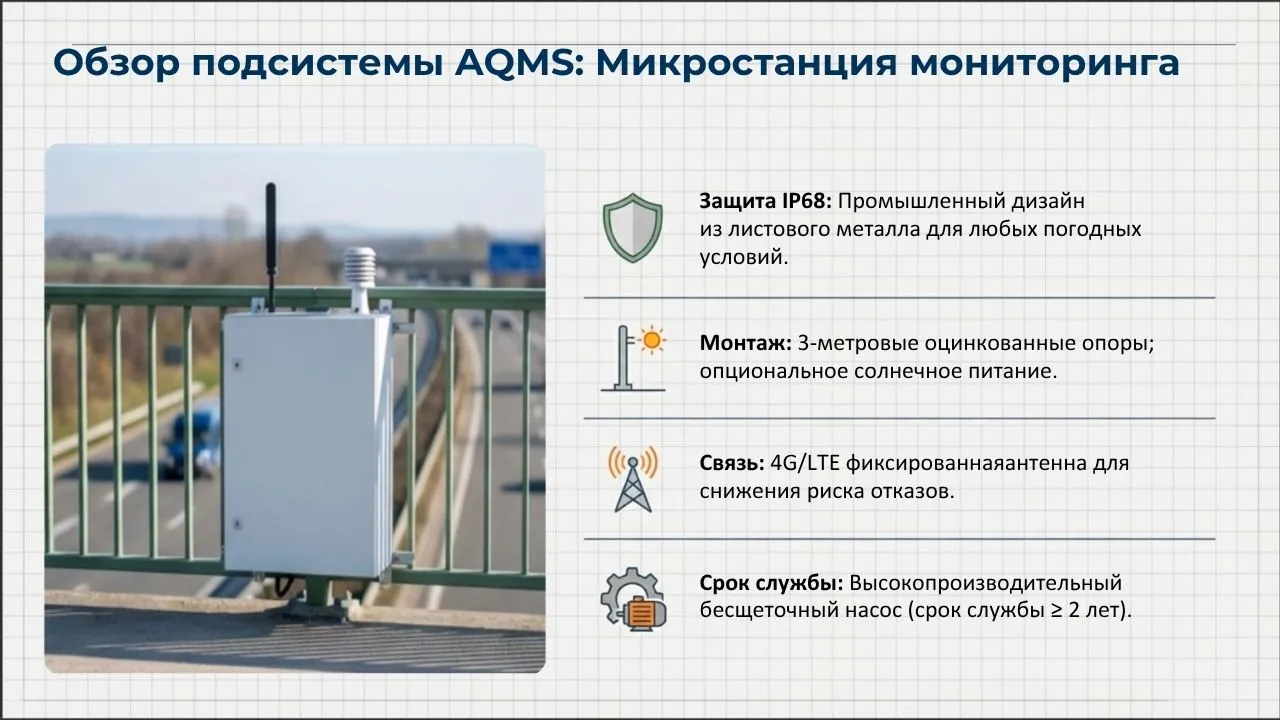
- AQMS, in the impact zone: PM2.5 and PM10; NO₂, SO₂, CO, O₃, H₂S, NH₃ and volatile organic compounds; wind speed and direction, temperature, humidity, atmospheric pressure. Stations go on the facility grounds, in the sanitary protection zone and in nearby areas.
What automation solves
- Regulatory compliance: a Presidential decree and a Cabinet of Ministers resolution require automatic emission monitoring stations at industrial facilities, and O'zMSt 194:2024 and 195:2024 set the requirements for them;
- Control of treatment equipment: if filter or gas cleaning efficiency drops, the deviation shows up in SCADA before emissions exceed the limit;
- The picture beyond the stack: AQMS data combined with weather conditions lets you build dispersion models and assess conditions around the facility;
- Continuous data instead of spot checks: the measurement archive stays in the system and is available to both the facility and the regulator.
Why SIGMA PRO
- Authorised Gasmet and Cubic partner: original equipment with manufacturer certificates, backed by our own service team;
- In-house engineering: we do the automation schematics, cabinet assembly and software ourselves;
- Our own Uspace platform: data comes into our RTU-SUN node, and we are responsible for the channel all the way to the regulator;
- 25+ years in ICS and SCADA: CEMS and AQMS become part of your control system, with no separate circuit to maintain.
Tell us about your facility: the industry, the number of emission sources, and whether you already have gas cleaning and measuring equipment. After a survey we’ll work out the system configuration, timeline and cost.
Frequently asked questions
What is the difference between CEMS and AQMS?
CEMS sits at the emission source and shows what the stack emits and how much. AQMS measures the air on site, in the sanitary protection zone and in nearby areas, and shows how those emissions affect the environment. Together they give you the full picture, from a specific stack to the air in the next neighbourhood.
Which facilities need CEMS and AQMS?
Mainly power generation, oil and gas, chemicals, metallurgy, and cement and building materials production. Some of these produce dust emissions, others NOₓ, SO₂, CO and hydrocarbons, so the set of measurements is chosen for each process.
Is automatic emission monitoring mandatory?
A Presidential decree and a Cabinet of Ministers resolution require automatic emission monitoring stations at industrial facilities. The national standards O'zMSt 194:2024 and O'zMSt 195:2024 set the requirements for them. Whether your facility needs a system, and in what configuration, is something we determine during the survey.
How does the data reach the regulator?
Analysers send readings to the Uspace RTU-SUN node via Modbus, MQTT or API. From there, data goes automatically over a secure channel to the Ecology Committee. It is also visible in your SCADA and corporate systems at the same time.
Can you connect gas analysers we already have?
Yes, if the device outputs data over a standard industrial protocol. During the survey we check the model, protocol and condition of the equipment. For outdated devices we fit a gateway or suggest a replacement.
How long does implementation take?
It depends on the number of emission sources and AQMS stations, how ready the site is, and the certification stage. We give you an exact schedule after surveying the facility.