


 en
en
 UZ
UZ  RU
RU Automated environmental monitoring: CEMS and AQMS systems
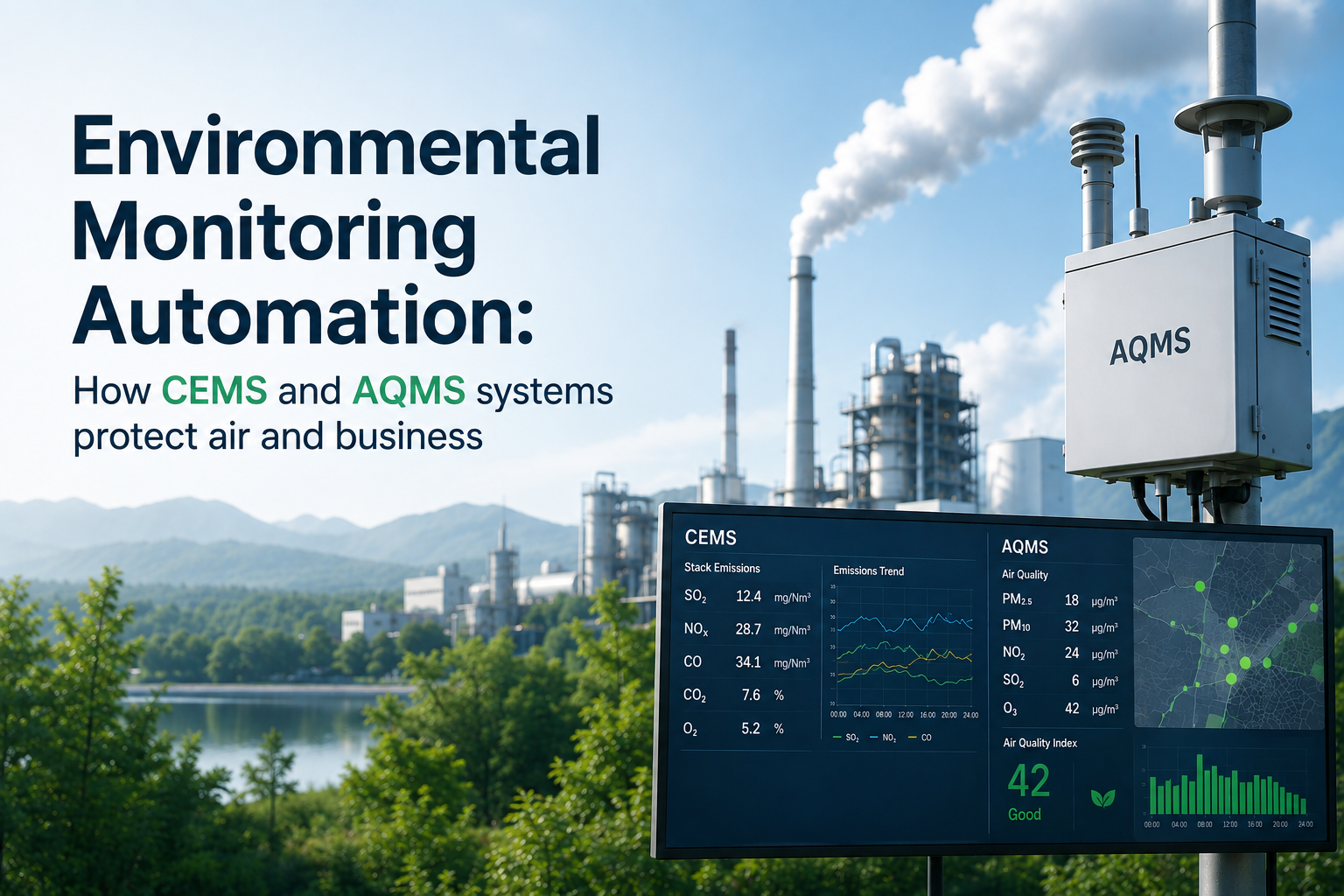
The invisible threat: what a modern city breathes
Clean air feels like a natural given, until smog or a sharp smell appears over the industrial zone.
What the eye cannot see is more dangerous: fine particulate matter PM2.5 and PM10, and toxic gases. The wind carries them into residential areas, and that is a matter of public health, not only of environmental reporting. Continuous environmental monitoring linked to production automation helps detect such emissions in time.
Sources of pollution: production and treatment facilities
The main load on the atmosphere comes from power generation, the chemical industry, metallurgy and transport. Plants use gas cleaning equipment and treatment facilities, but without accurate metering there is no way to assess how effective they really are.
Environmental monitoring should not merely record the total volume; it should also show the composition of pollutants in real time.
Digitalising environmental control: from inspections to automation.
State environmental oversight is changing fast, moving from one-off inspections to permanent digital dispatching. The current strategy includes strict standards, fitting plants with filters, and the mandatory rollout of IoT solutions that transmit data to the regulators automatically. This turns environmental safety from paper reports into a transparent digital system.
Emissions data goes straight to the regulator, with no manual processing in between. A deviation can no longer be spotted after the fact, while the report is being prepared: it has to be answered at the moment it occurs.
CEMS and AQMS: continuous control of emissions
Digital oversight relies on two types of measurement systems.
The main tools of digital oversight are specialised measurement systems:
- CEMS (continuous emissions monitoring system): sensors are mounted directly on stacks and generation sources, recording concentrations of NOx, SO2, CO and other substances at the outlet.
- AQMS (ambient air quality monitoring system): background monitoring stations are placed in the sanitary protection zone to track air quality around the plant.
- The Uspace platform. Installing sensors pays off only when a single software environment is in place. The Uspace platform brings CEMS, AQMS and treatment facilities together in one convenient control panel. Running on its own hardware, it connects over open protocols (Modbus, MQTT, API) and works with equipment of any make. Uspace keeps data transparent for the Ministry of Ecology, protects the plant from fines and helps eliminate faults before they turn into incidents.
This makes it possible to prevent harmful impact: if the efficiency of treatment facilities or filter units drops, the deviation is visible in advance. Environmental control turns from a one-off inspection into a monitoring system that runs all the time.
CEMS and AQMS usually work together with industrial automation and SCADA, so the load on the treatment equipment is visible in real time.
Automated environmental monitoring gives a plant exactly that: reliable data, a timely response to deviations and a steady reduction in the impact of production on the environment.
The two systems together make it possible to prevent harmful impact: when the efficiency of treatment facilities or filter units falls, the deviation is visible in advance. Environmental control stops being a one-off procedure.
Environmental policy is changing the approach to industrial emissions.
Installing gas cleaning equipment and confirming its operation from time to time is not enough. What happens to emissions has to be visible at all times.
Automated environmental monitoring gives a plant four practical results:
- Reliable data instead of estimates calculated from standards
- A response to a deviation before it becomes a violation
- Transparent reporting to the regulators
- A basis for decisions on upgrading treatment equipment
SIGMA PRO designs and implements CEMS and AQMS systems for industrial plants in Uzbekistan: selection of gas analysis equipment, integration with ICS and SCADA, data output to the Uspace platform and transmission to the regulators.
Environmental safety does not start with an emissions report, but with understanding what happens to those emissions every day.
Clean production is a responsibility to future generations and to the country.